
How Stress Affects Your Brain and Daily Life
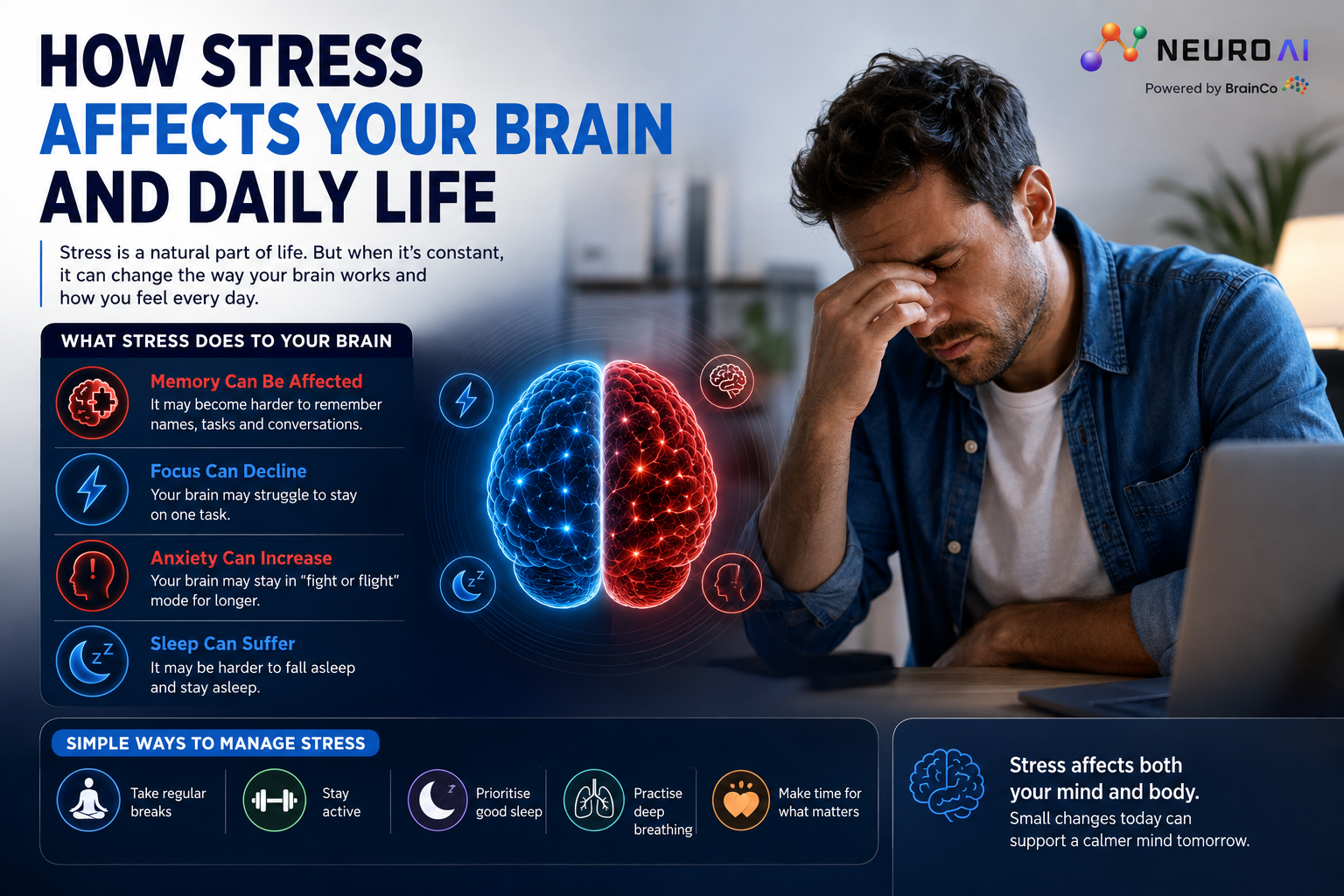
Understanding the Connection Between Stress and Your Brain
Stress is a normal part of everyday life. Deadlines, work responsibilities, financial pressures, relationship challenges and unexpected situations can all trigger a stress response.
While short-term stress can help you stay alert and respond to challenges, ongoing or excessive stress can affect how you think, feel and function throughout the day.
Your brain plays a central role in how your body responds to stress. When you experience stressful situations, your brain and body work together to prepare you to deal with what is happening. If this response happens too frequently, it can start to affect areas such as focus, sleep, mood and overall wellbeing.
“Stress doesn’t just affect how you feel — it can also influence how your brain functions throughout the day.”
What Happens to Your Brain When You’re Stressed?
When your brain perceives a situation as stressful, it activates the body’s stress response. This can increase alertness and prepare you to respond quickly.
For short periods, this response can be useful. However, when stress becomes frequent or prolonged, it may become harder to switch off and fully relax.
You might notice changes in:
- Concentration and focus
- Memory and recall
- Mood and emotional wellbeing
- Sleep quality
- Energy levels
- Ability to relax
Everyone responds to stress differently, and occasional stress is a normal part of life.
How Stress Can Affect Focus
Have you ever sat down to complete a simple task but found your mind constantly wandering?
Stress can make it more difficult to maintain attention, particularly when your mind is occupied with worries or multiple demands.
Instead of concentrating fully on one task, you may find yourself thinking about what needs to be done next, replaying previous situations or worrying about potential problems.
This can make everyday tasks feel more mentally demanding.
Stress and Memory
Stress can also influence how easily you concentrate on and recall information.
When your attention is focused on a stressful situation, it may become harder to process new information effectively. You might find yourself forgetting small details, losing your train of thought or struggling to remember something you normally wouldn’t have difficulty recalling.
Occasional forgetfulness is common, but persistent changes in memory or concentration should not automatically be attributed to stress. If you’re concerned about ongoing symptoms, speaking with a qualified healthcare professional is important.
How Stress Can Affect Sleep
Stress and sleep can influence each other.
A busy mind at bedtime can make it difficult to relax and fall asleep. You may find yourself thinking about work, responsibilities or upcoming events instead of settling into a restful state.
Poor sleep can then leave you feeling tired and less able to manage everyday stress the following day, creating a cycle that can be difficult to break.
Developing a consistent sleep routine and creating time to unwind before bed can help support healthier sleep habits.
Stress Can Affect Your Daily Life
The effects of ongoing stress aren’t necessarily limited to one part of your day.
You might notice that you’re:
- Finding it harder to concentrate at work
- Feeling mentally tired
- Becoming more easily frustrated
- Struggling to switch off after work
- Sleeping poorly
- Finding everyday tasks more difficult
- Having less time or energy for activities you enjoy
Recognising these changes can be an important first step towards making positive adjustments to your daily routine.
Simple Ways to Support Your Brain During Stress
You can’t always remove the things that cause stress, but you can develop habits that support your overall wellbeing.
Take Regular Breaks
Short breaks during mentally demanding activities can give your mind an opportunity to reset before returning to a task.
Practise Relaxation
Mindfulness, meditation, breathing exercises or simply spending quiet time away from screens can help create moments of calm during a busy day.
Prioritise Sleep
A consistent sleep routine can support your overall mental and physical wellbeing and give your body time to recover.
Stay Physically Active
Regular movement and exercise can support overall health and provide a healthy way to manage everyday tension.
Create Boundaries
Where possible, separate work and personal time so your brain has an opportunity to switch from task-focused activity to relaxation.
Understanding Stress Through EEG Technology
Stress can influence the way we focus, relax and sleep, and brain activity naturally changes as we move between these different states.
EEG technology provides a way to observe these changes by measuring the brain’s electrical activity. At Neuro AI, we make this technology available through a range of BrainCo-powered EEG wearables, each designed around different aspects of everyday wellness.
If you’re interested in exploring focus and relaxation, FocusCalm provides a way to practise and monitor these activities. For those looking to create calmer moments throughout the day, OxyZen focuses on relaxation and mindfulness. And if your main interest is understanding your sleep, Easleep is designed around sleep-related brain activity.
Important: Consumer EEG devices are intended for personal wellness and self-awareness and should not be used to diagnose or treat medical conditions.
