
What Is Neurofeedback? How Brain Training Works With EEG Technology
Your brain is constantly active, even when you are resting. But can you actually train your brain to improve focus, relaxation and self-regulation?
Neurofeedback is a type of brain training that uses real-time information about brain activity to help you learn how to regulate certain patterns of brain activity. When combined with EEG (electroencephalography) technology, it provides a way to observe brain activity and receive immediate feedback.
What Is Neurofeedback?
Neurofeedback is a non-invasive training technique that provides feedback based on your brain activity.
The process is simple:
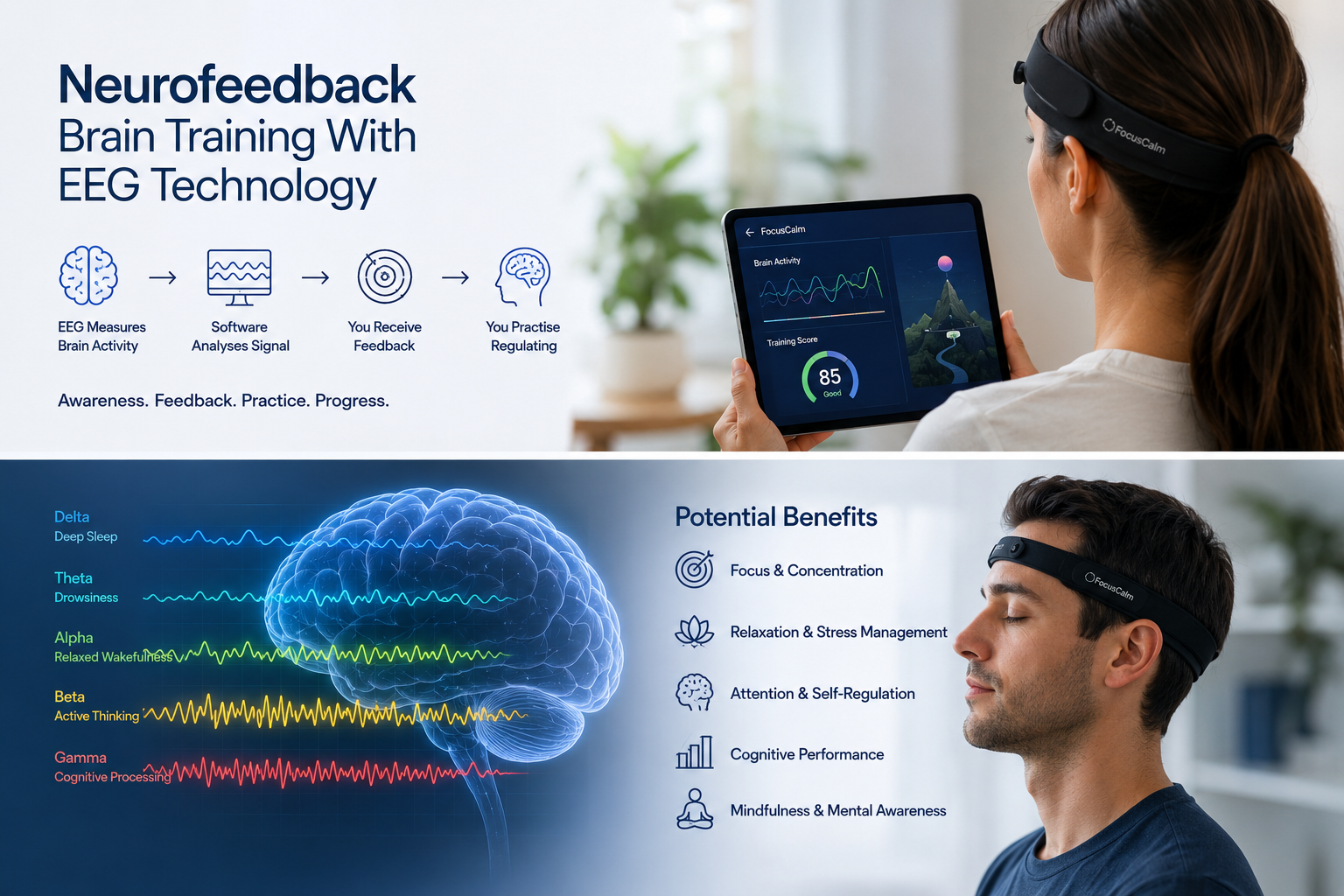
EEG measures brain activity → software analyses the signal → you receive feedback → you practise regulating your mental state.
With regular practice, the goal is to help you become more aware of and better at managing certain mental states.
How Does EEG Neurofeedback Work?
EEG sensors detect electrical activity from the brain through the scalp. The system then analyses aspects of this activity, such as different brainwave frequencies.
You may have heard of brainwave categories including:
- Delta: commonly associated with deep sleep
- Theta: often linked with drowsiness and relaxed states
- Alpha: commonly associated with relaxed wakefulness
- Beta: associated with active thinking and attention
- Gamma: associated with various cognitive processes
Neurofeedback software uses selected EEG information to provide feedback through an app, sound, visual display or interactive game.
For example, FocusCalm uses an EEG headband and real-time feedback to support brain-training exercises through its companion app.
What Are the Potential Benefits?
Neurofeedback is being researched for several areas of brain and cognitive training, including:
- Focus and concentration
- Relaxation and stress management
- Attention and self-regulation
- Cognitive performance
- Mindfulness and mental awareness
Research has shown promising findings in some areas, although results can vary depending on the individual and the neurofeedback protocol being used. It is important to avoid viewing neurofeedback as a guaranteed treatment or instant solution.
Neurofeedback vs Meditation
Meditation and neurofeedback can both help you practise awareness and self-regulation, but they work differently.
Meditation relies on techniques such as focusing on your breathing or observing your thoughts. Neurofeedback adds an external feedback system based on measured brain activity.
Some people may choose to combine both approaches, using meditation or breathing techniques while receiving real-time feedback.
Is Neurofeedback Safe?
EEG is a non-invasive method of measuring brain activity and does not involve radiation.
However, different neurofeedback systems and protocols are designed for different purposes. If you are considering neurofeedback for a medical or mental health condition, speak with a qualified healthcare professional first.
How Often Should You Use Neurofeedback?
There is no single schedule that works for everyone. Consistent practice is generally more useful than occasional sessions.
Consumer brain-training systems may use short sessions that can be incorporated into your regular routine. FocusCalm, for example, recommends regular 10–20 minute sessions as part of its brain-training approach.
Final Thoughts
Neurofeedback combines brain science, EEG technology and real-time feedback to create an interactive approach to brain training.
Rather than simply telling you to focus or relax, neurofeedback can provide feedback while you practise, helping make an invisible process more tangible.
If you’re interested in exploring your brain activity and developing better focus and relaxation skills, EEG-based neurofeedback is an interesting technology to explore.
Learn more about how FocusCalm uses EEG and neurofeedback to make brain training simple and engaging.
Disclaimer: This article is for general educational purposes only and is not medical advice.
