
How to Create a Brain-Friendly Daily Routine for Better Focus
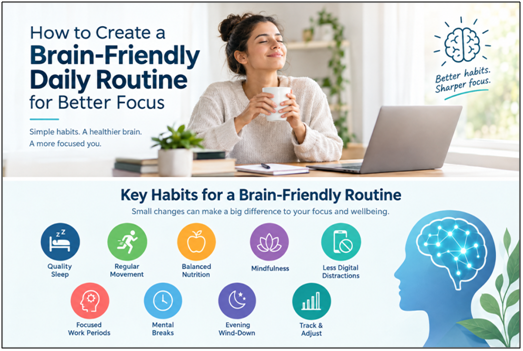
In a world filled with notifications, busy schedules and constant digital distractions, staying focused can be challenging. The good news is that improving concentration does not always require major lifestyle changes. Building a consistent, brain-friendly daily routine can help support focus, mental clarity and overall wellbeing.
A brain-friendly routine brings together simple habits such as quality sleep, regular movement, balanced nutrition, mindfulness and intentional breaks. Together, these habits can create the right conditions for your brain to stay alert and focused throughout the day.
What Is a Brain-Friendly Routine?
A brain-friendly routine is a daily schedule designed to support healthy cognitive function and mental wellbeing. Rather than relying on productivity alone, it focuses on giving your brain the essentials it needs — adequate rest, movement, nourishment, recovery and periods of uninterrupted concentration.
There is no single routine that works for everyone. The goal is to develop consistent habits that fit your lifestyle and help you feel more focused and mentally balanced.
1. Start Your Day With a Consistent Sleep Schedule
Sleep plays an important role in attention, memory and mental performance. Not getting enough quality sleep can make it harder to concentrate and maintain focus.
Try to:
- Go to bed and wake up at similar times each day.
- Aim for around 7–9 hours of sleep if appropriate for you.
- Create a relaxing wind-down routine before bed.
- Limit stimulating screen use close to bedtime.
A consistent sleep schedule can help support your body’s natural rhythm and prepare your brain for the day ahead.
2. Give Your Brain Time to Wake Up
Instead of immediately checking emails, social media or notifications, give yourself some uninterrupted time in the morning.
You could start your day with:
- A glass of water
- A healthy breakfast
- Light stretching or a short walk
- A few minutes of mindfulness
- Planning your key priorities for the day
Starting with fewer distractions can make it easier to transition into focused work.
3. Focus on One Task at a Time
Multitasking can make it harder to maintain attention because your brain has to repeatedly switch between tasks. Try choosing one important task and giving it your full attention before moving on to the next.
A simple approach is to work in focused blocks followed by short breaks. Adjust the length of each block according to what works best for you.
4. Include Movement Throughout the Day
Physical activity isn’t just good for your body — it can also support cognitive health. Recent research continues to investigate the relationship between exercise and cognition, with evidence suggesting that regular physical activity can provide benefits for areas such as memory and executive function.
You don’t necessarily need a long workout. Consider:
- Taking a brisk walk
- Stretching between tasks
- Cycling
- Taking the stairs
- Doing a short exercise session
Even small amounts of movement can help break up long periods of sitting.
5. Practise Mindfulness
Mindfulness involves bringing your attention to the present moment without judgement. It can be incorporated into your routine through meditation, breathing exercises or simply paying closer attention to everyday activities.
Even a few minutes of mindfulness may provide an opportunity to pause, reset and reduce mental distractions. Mayo Clinic notes that mindfulness can support focus, stress management and overall wellbeing.
6. Reduce Digital Distractions
Constant notifications can interrupt your attention and make it difficult to stay engaged with a task.
Try creating distraction-free periods by:
- Silencing non-essential notifications
- Putting your phone out of reach
- Closing unnecessary browser tabs
- Limiting social media during focused work
- Keeping your workspace as quiet as possible
You don’t need to eliminate technology — the goal is to use it more intentionally.
7. Eat for Steady Energy
Your brain requires energy to function effectively, so regular, balanced meals are an important part of a healthy daily routine.
Focus on a varied diet that includes vegetables, fruit, whole grains, protein sources and healthy fats. Avoid relying heavily on highly processed foods and excessive amounts of added sugar for energy.
8. Schedule Mental Breaks
Your brain isn’t designed to maintain intense concentration indefinitely. Short breaks can give you an opportunity to reset before returning to a demanding task.
During a break, step away from your screen, stretch, take a short walk or simply spend a few quiet minutes doing something different.
9. Create an Evening Wind-Down Routine
Your evening routine can influence how prepared you feel for the following day.
Consider finishing demanding tasks earlier where possible and creating a calmer period before bedtime. Reading, gentle stretching, mindfulness or another relaxing activity can help create a clear transition from daytime activity to rest.
10. Track Your Patterns and Adjust Your Routine
A brain-friendly routine should be personalised rather than rigid.
Pay attention to patterns such as:
- When you feel most alert
- When your concentration tends to drop
- How well you sleep
- How often you wake during the night
- How stress affects your focus
- Which habits leave you feeling energised or mentally tired
Tracking these patterns over time can help you understand what works best for you and make more informed adjustments to your routine.
Conclusion
Better focus isn’t simply about working harder. It is about creating an environment and routine that supports your brain throughout the day.
Prioritising quality sleep, regular movement, balanced nutrition, mindfulness, focused work periods and meaningful breaks can help create a more sustainable approach to concentration and mental wellbeing.
How Neuro AI Can Help
Neuro AI combines innovative EEG technology with brain-training and wellbeing solutions designed to support focus, relaxation and everyday brain wellness. Its technology provides insights into brain activity, helping you develop greater awareness of your focus and relaxation patterns. By combining these insights with healthy daily habits, Neuro AI can complement your routine and support a more mindful approach to achieving a calmer, more focused mind.
Explore FocusCalm to learn more about how EEG-powered neurofeedback can support your focus and concentration.
Disclaimer: This article is intended for general informational and educational purposes only and should not be considered medical advice, diagnosis or treatment. If you have ongoing concerns about your focus, sleep or mental wellbeing, speak with a qualified healthcare professional.
