
Why Is It So Hard to Focus? Understanding Attention Fragmentation
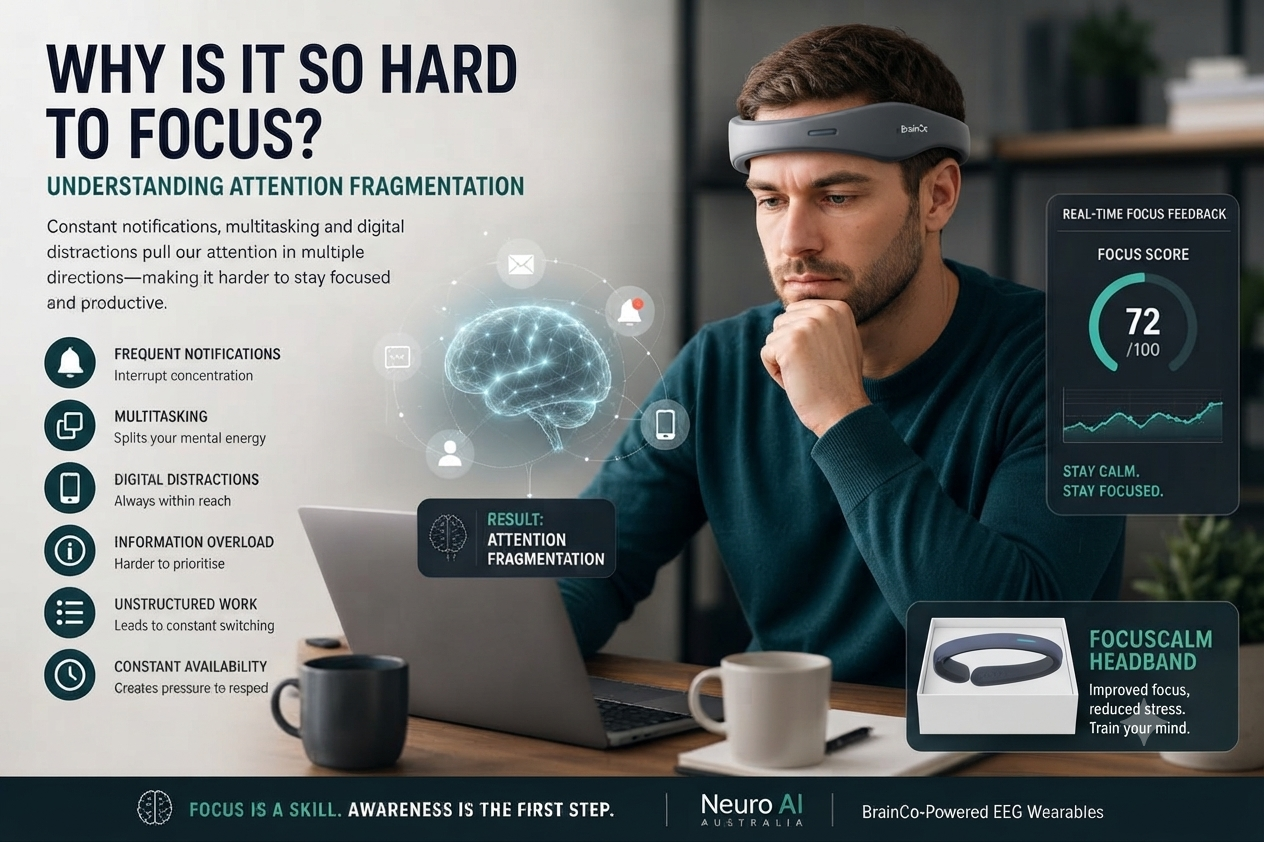
Staying focused can feel harder than ever. Between notifications, emails, social media, meetings and constant switching between tasks, our attention is often pulled in several directions throughout the day. Even when we have time to concentrate, the habit of checking devices or jumping between tasks can make sustained attention more difficult.
This is often described as attention fragmentation — a state where our attention is repeatedly divided or interrupted instead of being directed towards one task for an extended period.
What Is Attention Fragmentation?
Attention fragmentation happens when your focus is frequently interrupted by different sources of information or competing tasks. It can occur when you switch between work, messages, websites, apps and other activities throughout the day.
For example, you might start writing an email, check a notification, open social media for a moment and then return to the email. Although each interruption may seem brief, repeatedly switching your attention can make it harder to stay engaged with the original task.
Over time, constant switching can become an everyday pattern rather than an occasional interruption.
Why Do We Struggle to Maintain Focus?
Modern digital environments are designed around constant information flow. Notifications, alerts, messages and new content can create frequent opportunities to redirect our attention.
Some common factors include:
- Frequent notifications: Phone and app alerts can interrupt concentration.
- Multitasking: Moving between several tasks can make sustained attention more difficult.
- Digital distractions: Social media, news feeds and entertainment are always within reach.
- Information overload: Processing large amounts of information can make it harder to prioritise.
- Unstructured work: Without clear priorities, attention can move between tasks unnecessarily.
- Constant availability: Being expected to respond quickly can encourage frequent checking of devices.
The result is not necessarily a lack of motivation. Sometimes, the environment around us simply creates too many opportunities for our attention to shift.
The Hidden Cost of Constant Task Switching
Switching between tasks may feel productive because you are doing several things at once. However, frequent switching can make it harder to maintain a consistent train of thought.
Imagine working on an important project while responding to messages every few minutes. Each time you move away from the project, you need to reconnect with what you were doing when you return.
This can make simple tasks feel more mentally demanding and can make longer periods of concentrated work more difficult.
How Can You Reduce Attention Fragmentation?
You don’t necessarily need to disconnect from technology completely. Small changes to your daily routine can create better conditions for focused work.
1. Reduce Unnecessary Notifications
Turn off alerts that are not essential. Keeping fewer interruptions can make it easier to remain engaged with the task in front of you.
2. Work in Focused Blocks
Instead of constantly switching between tasks, dedicate a specific period to one activity. Even 20–30 minutes of uninterrupted attention can provide a useful starting point.
3. Create Clear Priorities
A long to-do list can make your attention jump from one task to another. Identifying one or two important priorities can provide a clearer direction.
4. Take Intentional Breaks
Focus is not about working continuously. Short breaks can give your mind an opportunity to reset before returning to the next task.
5. Understand Your Attention Patterns
Pay attention to when and where you lose focus. Are notifications distracting you? Do you check your phone whenever a task becomes difficult? Understanding the pattern is the first step towards changing it.
Can Technology Help Us Understand Focus?
Technology is increasingly being used to provide insights into how we experience attention. Wearable devices that use EEG (electroencephalography) can monitor electrical activity associated with brain activity and provide feedback through compatible software.
Rather than simply assuming that you are focused or distracted, neurofeedback technologies can help provide a more measurable way to observe changes in your attention over time.
For example, FocusCalm EEG Headband uses EEG-based technology to provide real-time focus feedback, allowing users to observe their focus score while engaging with compatible neurofeedback activities.
This type of technology is not about replacing healthy habits. Instead, it can be used as an additional tool for becoming more aware of your attention patterns and practising focused attention.
Focus Is a Skill You Can Practise
Attention fragmentation is increasingly common in a world where information is constantly competing for our attention. The solution does not necessarily mean avoiding technology altogether. It can involve becoming more intentional about when, where and how we use it.
Reducing unnecessary interruptions, creating dedicated focus periods, taking regular breaks and becoming more aware of your attention patterns can all help create better conditions for concentration.
For people interested in exploring technology-assisted focus training, Neuro AI offers BrainCo-powered EEG wearables designed to provide insights into focus and brain activity, including the FocusCalm EEG Headband. Explore how neurofeedback can become part of a more mindful approach to everyday focus.
