
Brain Fog Explained: Causes, Symptoms and Practical Tips
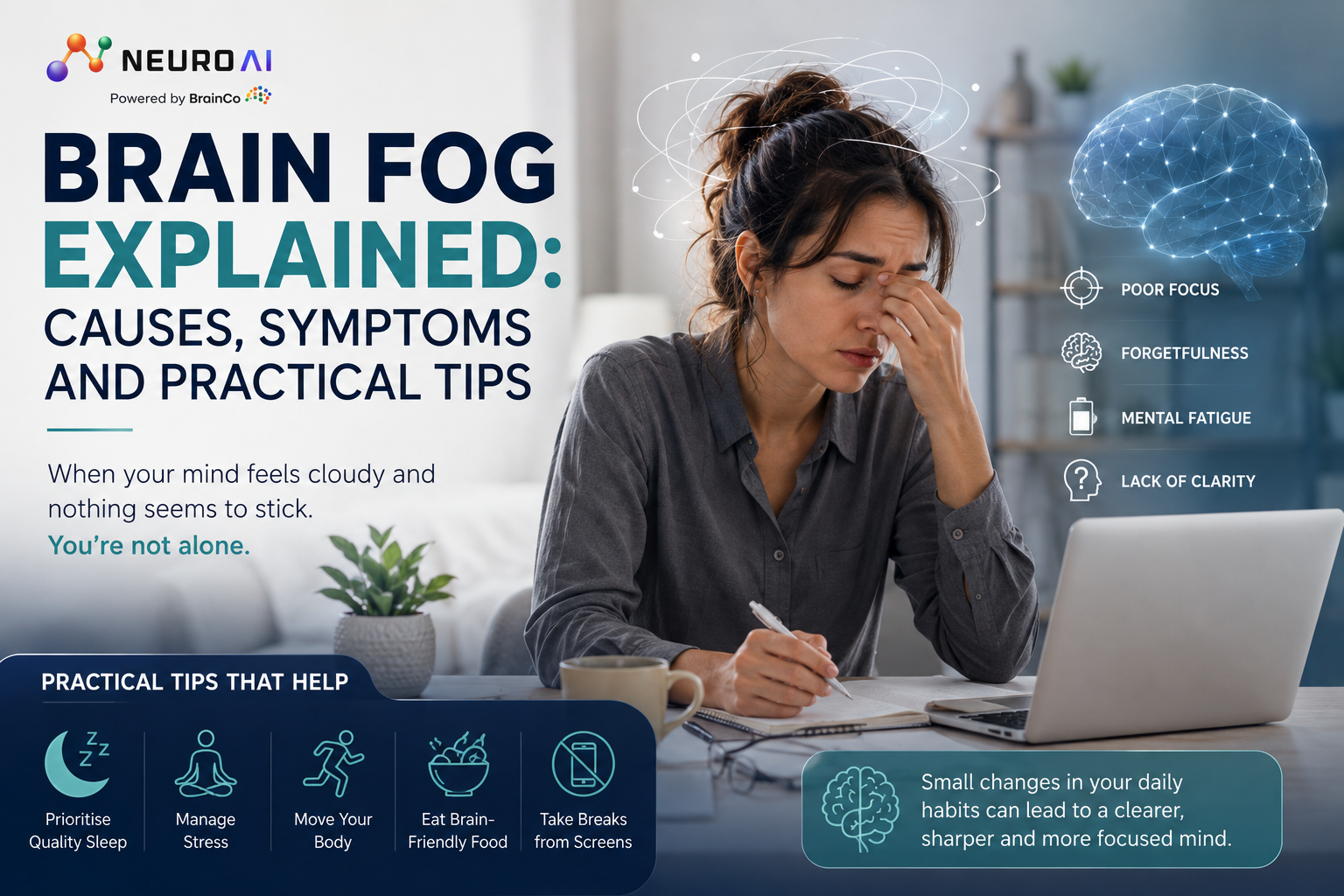
Ever Feel Like Your Brain Is Running on Slow Mode?
You know what you want to say, but the right word just won’t come to mind.
You walk into a room and forget why you went there. You read the same sentence twice. You start a task, get distracted and suddenly realise you’ve lost track of what you were doing.
If this sounds familiar, you may have experienced what people commonly call brain fog.
Brain fog isn’t a medical diagnosis. It’s a general term people use to describe periods of mental sluggishness, forgetfulness, poor concentration or difficulty thinking clearly.
And it can happen to anyone from time to time.
What Does Brain Fog Actually Feel Like?
Brain fog can be difficult to describe because it doesn’t look the same for everyone.
You might notice:
- Difficulty concentrating on a task
- Forgetting names, words or small details
- Feeling mentally tired
- Taking longer to process information
- Losing your train of thought
- Struggling to stay organised
- Finding simple decisions surprisingly difficult
Sometimes it’s obvious. Other times, it may simply feel like you’re not performing at your usual level.
Think of it as mental traffic — your brain is still working, but everything feels slower and harder to navigate.
So, What Causes Brain Fog?
There’s rarely one simple explanation. Brain fog can be associated with everyday habits, lifestyle factors and periods when your mind or body is under extra pressure.
Not Enough Quality Sleep
A late night isn’t always the problem. You can spend plenty of time in bed and still wake up feeling mentally exhausted if your sleep isn’t restful.
Poor sleep can affect concentration, memory and how alert you feel during the day.
Ongoing Stress
When your mind is constantly occupied with deadlines, responsibilities or worries, concentrating on the task in front of you can become difficult.
Your attention may keep jumping between what you’re doing and everything else competing for your attention.
Too Much Mental Load
Your brain has a lot to process every day.
Emails, notifications, meetings, social media, household responsibilities and constant decision-making can leave you feeling mentally overloaded.
Sometimes what feels like “brain fog” may simply be a sign that you need a genuine break.
An Unbalanced Routine
Irregular sleep, limited physical activity, poor eating habits and spending too much time sitting can all influence how energetic and mentally alert you feel.
Your brain doesn’t operate separately from the rest of your body. Looking after your overall wellbeing matters too.
Other Factors
Brain fog can sometimes occur alongside illness, hormonal changes, medication use or other health-related factors.
If brain fog is persistent, severe or affecting your daily life, it’s worth speaking with a qualified healthcare professional rather than assuming lifestyle changes are the only answer.
Brain Fog vs Feeling Tired
They’re related, but they’re not quite the same.
Feeling tired usually means you lack physical or mental energy.
Brain fog is more about how your thinking feels.
You can be physically awake but still feel mentally slow, distracted or unable to concentrate.
And the two can easily occur together — especially after poor sleep or during particularly stressful periods.
What Can You Do When Your Mind Feels Foggy?
You don’t necessarily need to make dramatic changes.
Start with the basics.
Get Consistent Sleep
Try keeping your bedtime and wake-up time relatively consistent. Give yourself enough time to sleep rather than relying on catch-up sleep when you’re exhausted.
Step Away From the Screen
If you’ve been staring at a screen for hours, take a proper break. Get up, move around and give your attention something different to focus on.
Move Your Body
A short walk can be a useful way to break up long periods of sitting and give you some time away from your usual environment.
Reduce Mental Clutter
Instead of keeping everything in your head, write down tasks, reminders and priorities. A simple list can reduce the amount you need to remember at once.
Make Time to Unwind
Relaxation isn’t wasted time. Meditation, breathing exercises, reading or simply sitting somewhere quiet can give your mind a chance to slow down.
Can Brainwave Technology Help You Understand Your Focus?
This is where EEG technology becomes interesting.
Electroencephalography (EEG) measures the brain’s electrical activity through sensors placed on the scalp. Different patterns of brain activity are associated with different states, including focus, relaxation and sleep.
Wearable EEG technology allows people to explore aspects of their brain activity during everyday wellness activities.
It doesn’t provide a simple “brain fog score”, nor can it determine the cause of brain fog. Instead, it can be used as a tool for self-awareness and wellness, helping users explore how their brain responds during activities such as focus training, relaxation and sleep.
Exploring Brain Wellness with Neuro AI
At Neuro AI, we offer BrainCo-powered EEG wearable devices designed for different areas of everyday wellness.
FocusCalm is designed around focus training and relaxation, making it relevant for people interested in developing greater awareness during concentration and mindfulness activities.
OxyZen focuses on relaxation and mindfulness, while Easleep is designed around sleep-related brain activity.
The goal isn’t to label every moment of mental fatigue or brain fog. It’s about learning more about your own routines and developing habits that support your overall wellbeing.
Note: Consumer EEG wearables are intended for personal wellness and self-awareness and are not designed to diagnose or treat medical conditions.
